Digital tools now shape almost every step in implant dentistry. You see it in the way your dentist plans, places, and maintains your implants. Today, your care can start with a quick digital scan instead of a messy impression. Then, careful software planning guides the exact position of each implant. Finally, precise tools help place that implant with control. This technology does not replace skill. It supports it. It helps your dentist protect bone, avoid nerves, and match your bite. It can cut guesswork, shorten chair time, and reduce surprises. If you see a dentist in Chinatown, Lower Manhattan, NY, you may already notice these changes. You might see a scanner instead of trays. You might see a screen that shows your jaw in 3D. These tools give you clearer choices and more predictable results. They also give your dentist sharper insight into your long-term oral health.
How Digital Scans Change Your First Visit
Your first step toward an implant now often starts with a digital scan. The scanner uses light to map your teeth and gums. You breathe, swallow, and talk with less strain. You do not need sticky material in your mouth. The scan appears on a screen in seconds. You see your teeth and gums from many views. This clear picture helps you understand your own mouth. It also helps your dentist explain choices in plain terms.
Digital scans can help your dentist track changes over time. The images are stored safely. Future scans can show bone loss, tooth wear, or gum change. You see progress rather than guess. That record supports better planning if you ever need more work.
Also Read : How to Evaluate Family Office Software in 2026: A Question-Led Guide
3D X-rays and Safer Implant Planning
For implant planning, many dentists now use 3D X-rays called cone beam CT. These images show your bone height, width, and shape. They also show your nerves and sinus. This matters when placing an implant. The implant must fit in the bone without touching a nerve or sinus space. A 2D X-ray can hide these details. A 3D view gives a clearer map.
The National Institutes of Health shares research that shows how 3D imaging supports safer implant planning and more stable outcomes. You can read about radiation and dental imaging at https://www.nidcr.nih.gov/. This source explains why your dentist may choose a specific type of X-ray for implants.
Surgical Guides and More Accurate Placement
After the scan and 3D X-ray, your dentist can use software to plan the exact spot, angle, and depth for each implant. Then the office can order or print a guide. This guide fits on your teeth or gums during surgery. The guide has small openings that show where the implant goes. That control supports more accurate placement.
Accurate placement helps in three key ways.
- It supports better chewing.
- It protects nearby teeth and nerves.
- It improves the look of your smile.
This planning also helps your dentist predict if you need bone grafting. You learn about these steps before surgery. That clarity reduces fear and doubt for you and your family.
Digital Design of Crowns and Bridges
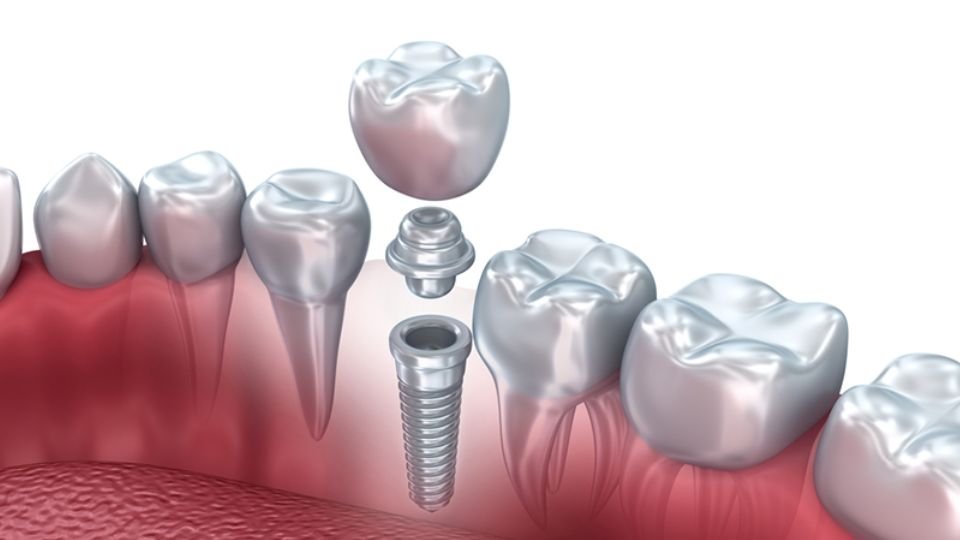
After your implant heals, you need a crown, bridge, or denture. Digital design tools help here as well. Your dentist can scan the implant and nearby teeth. Then, the software helps shape a crown that matches your bite and smile. The design goes to a lab or a milling machine in the office. Some offices can make the crown the same day. Others still work with a lab. Either way, the digital file helps keep the shape precise.
Digital design can also copy the shape of your natural teeth. If you lose a tooth in an accident, a scan from before can guide the new crown. That helps keep your smile closer to what you remember.
Comparison of Traditional and Digital Implant Steps
| Step | Traditional Method | Digital Method
|
|---|---|---|
| Impressions | Trays with putty material in mouth | Handheld scanner creates 3D image |
| X rays | Flat 2D images of jaws | 3D cone beam CT for full view of bone and nerves |
| Planning | Paper notes and simple models | Computer software with virtual implant planning |
| Surgery | Freehand placement guided by feel and X-rays | Surgical guide based on digital plan |
| Crown design | Wax models and manual shaping | Digital crown design and computer milling |
| Record keeping | Paper charts and film X-rays | Digital files and images stored electronically |
Follow up, Home Care, and Long Term Support
Digital tools also shape how you care for your implants at home. Many offices now send you clear online instructions, photos, and simple step-by-step guides. Some use secure messages or apps to check your healing. You can share a photo of your gums if you see swelling or bleeding. That quick contact can help your dentist decide if you need to come in soon.
Your regular checkups may use digital photos and scans to watch your gums and bone around the implant. Tiny changes can show early inflammation. The American Dental Association explains the importance of clean implants and gums at https://www.mouthhealthy.org/. Clean care at home and steady checkups support long-term success.
What This Means for You and Your Family
Digital implant care affects more than your teeth. Shorter visits can ease stress for children and older adults who wait for you. Clear images help you explain your treatment to family who support your choices. Secure digital records help if you move or change dentists. Your new dentist can see past scans, notes, and plans. That continuity protects your health.
You still need a dentist with strong training and steady hands. Digital tools cannot replace that. They only extend it. When you seek implant care, you can ask simple questions.
- Do you use digital scans for planning?
- Can I see my 3D images?
- Will you use a guide for implant placement?
Clear answers can calm fear. They show that your dentist uses current tools to support safe, stable care for you and your family.