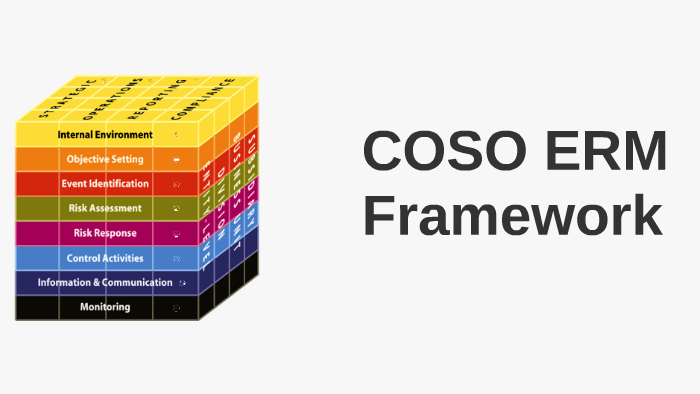
In today’s dynamic business environment, organizations face a multitude of risks—from financial and operational to strategic and compliance-related. Effectively identifying, assessing, and managing these risks is critical for sustainable growth. This is where the COSO Framework and COSO ERM Framework come into play, providing structured guidance for organizations to implement robust risk management practices.
What is the COSO Framework?
The COSO Framework, developed by the Committee of Sponsoring Organizations of the Treadway Commission (COSO), is a widely recognized standard for risk management, internal control, and corporate governance. Initially created to enhance financial reporting and prevent fraud, the COSO framework has evolved to address a broader spectrum of organizational risks.
Key components of the COSO framework include:
-
Control Environment – Establishing a culture of integrity, ethics, and accountability.
-
Risk Assessment – Identifying and analyzing risks that could prevent the organization from achieving objectives.
-
Control Activities – Implementing policies and procedures to mitigate risks.
-
Information & Communication – Ensuring timely, accurate, and relevant information flow.
-
Monitoring Activities – Continuously evaluating the effectiveness of internal controls.
Also Read : 3 Mouthguard Tips For Braces Wearing Young Athletes
The COSO ERM Framework Explained
The COSO ERM Framework (Enterprise Risk Management Framework) expands on the original COSO framework, focusing specifically on enterprise-wide risk management. It helps organizations anticipate potential threats, seize opportunities, and integrate risk management into strategic decision-making.
Core Components of COSO ERM Framework:
-
Governance and Culture – Aligning organizational culture with risk management priorities.
-
Strategy and Objective-Setting – Integrating risk considerations into strategic planning.
-
Performance – Evaluating risks in relation to organizational goals.
-
Review and Revision – Adjusting risk management processes as the organization evolves.
-
Information, Communication, and Reporting – Ensuring stakeholders have the insights needed to make informed decisions.
Also Read : TikTokStorm Review That Proves You Can Grow Without Losing Authenticity
Why Implement a COSO ERM Framework?
Implementing the COSO ERM framework enables organizations to:
-
Identify risks proactively before they impact operations.
-
Prioritize risk mitigation based on potential impact.
-
Integrate risk management into strategic planning and decision-making.
-
Enhance stakeholder confidence by demonstrating structured risk governance.
-
Comply with regulatory requirements and best practices.
COSO Risk Assessment: A Critical Step
A vital part of the COSO ERM framework is COSO risk assessment, which involves:
-
Identifying potential internal and external risks.
-
Analyzing the likelihood and impact of each risk.
-
Prioritizing risks for mitigation based on severity.
-
Developing action plans to manage or eliminate risks.
Organizations can use ERM templates to simplify and standardize this process, ensuring a consistent approach across departments and functions. These templates often include risk registers, assessment matrices, and monitoring dashboards.
ERM Templates: Simplifying Risk Management
ERM templates are practical tools that help organizations:
-
Document and track risks systematically.
-
Assign responsibilities and accountabilities.
-
Monitor risk mitigation progress over time.
-
Align risk management with COSO principles efficiently.
Using these templates ensures that risk management is not just a theoretical framework but a practical, actionable process embedded in daily operations.
Conclusion
The COSO framework and COSO ERM framework are indispensable tools for modern organizations seeking to manage risk strategically and proactively. By leveraging COSO risk assessment and utilizing ERM templates, organizations can create a culture of risk awareness, improve decision-making, and safeguard their long-term success.
Investing in a structured enterprise risk management framework is no longer optional—it’s essential for any organization aiming to thrive in today’s complex business landscape.