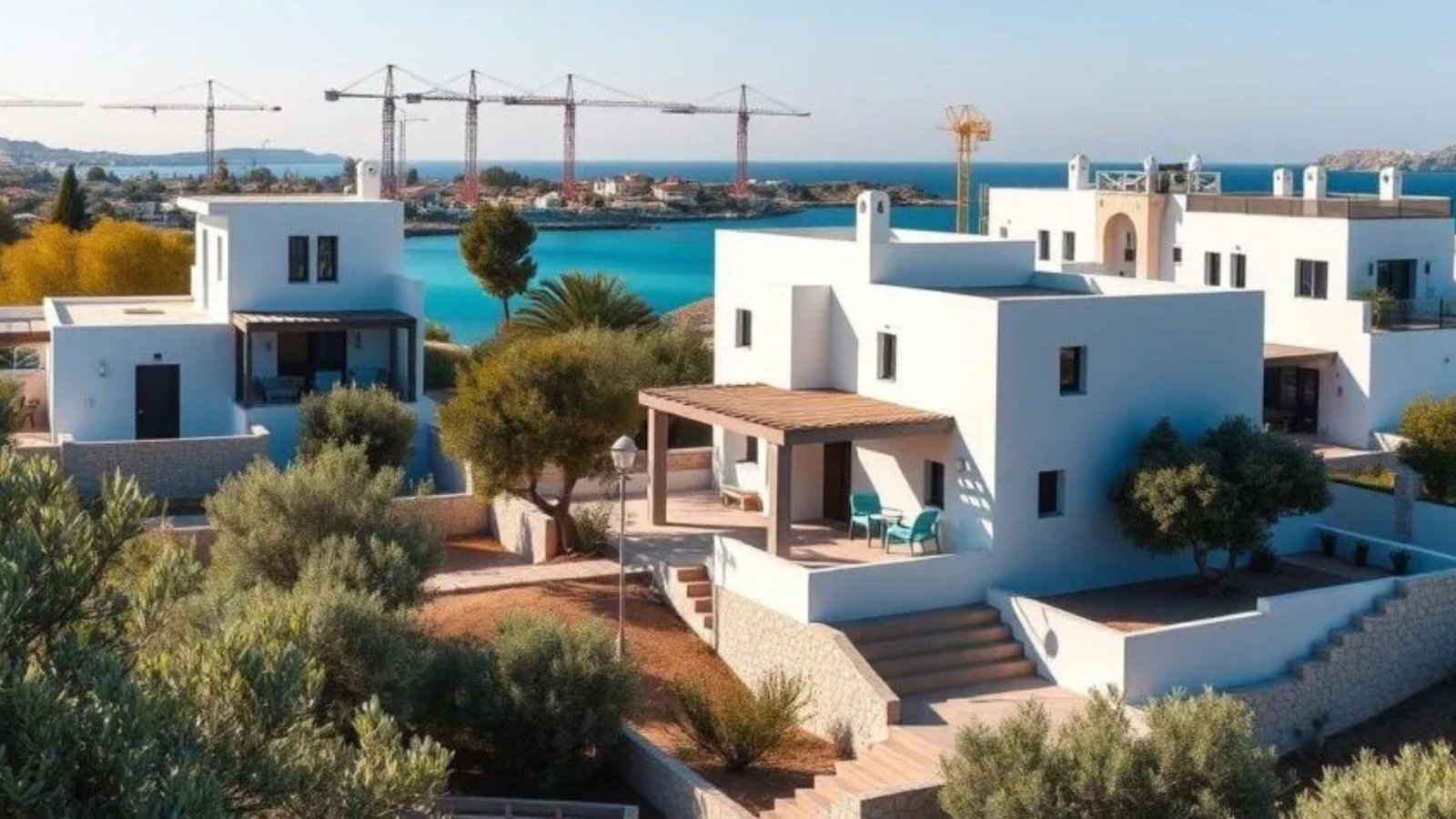
Greece continues to attract global investors with a diverse property market that supports both capital growth and EU residency opportunities. When entering the market, buyers typically face a strategic choice between newly developed residential projects and existing resale properties. Each route offers distinct financial dynamics, risk profiles, and management requirements.
New developments appeal to investors seeking modern, energy-efficient, and low-maintenance assets that align with long-term market trends. Resale properties, while often more affordable upfront, introduce renovation costs, legal complexity, and operational oversight.
This guide explores both approaches in detail to help investors identify the optimal strategy for Greek real estate investment in 2025.
Investing in New Developments: Efficiency, Compliance, and Growth
Demand for newly constructed residential property in Greece has grown consistently, particularly in metropolitan areas with limited development capacity. Over the past two years, new-build demand increased by more than 25%, driven by energy regulations, lifestyle preferences, and Golden Visa criteria.
New homes that qualify for the Greek Golden Visa are often more expensive than average market listings. The current price is about €5,000-7,000 sq. ft. This is because Golden Visa properties are commonly delivered fully completed and move-in ready, featuring finished interiors, fitted kitchens, bathroom installations, furniture, and access to shared amenities such as swimming pools, fitness centers, and parking.
Why Investors Choose New Builds
- Modern construction standards
New developments feature contemporary layouts, enhanced soundproofing, advanced thermal insulation, and smart building systems. All properties comply with updated seismic safety requirements and achieve high energy-efficiency ratings (Class A or B), significantly reducing operating costs and improving long-term market appeal.
- Minimal maintenance exposure
Structural components, electrical systems, plumbing, and mechanical installations are new and covered by developer warranties. This eliminates major capital expenditures for many years, making new builds ideal for investors seeking predictable cash flow.
- Premium lifestyle features
Modern residential complexes often include private parking, security systems, solar water heating, elevators, and shared amenities. Buyers may also customize layouts and finishes during early construction phases — an advantage unavailable in resale housing.
- Straightforward Greece Golden Visa qualification
New developments fully comply with Greek residency by investment requirements:
- €800,000 minimum investment in high-demand locations such as Athens, Thessaloniki, Mykonos, and Santorini
- €400,000 in secondary regions
- €250,000 for developer-led commercial-to-residential conversions
Prime locations
Most new projects are concentrated in Athens and its suburbs, including the Athenian Riviera (Glyfada, Voula, Vouliagmeni). Thessaloniki offers modern developments in Kalamaria, Pylaia, and Evosmos. Limited new construction is also available in Crete, Rhodes, and Corfu, while Mykonos and Santorini remain tightly regulated with restricted supply and premium pricing.
Also Read : The Link Between Oral Health And Overall Wellness
Resale Properties: Lower Purchase Price, Higher Engagement
Existing properties form the majority of Greece’s residential stock, particularly in urban centers and established resort areas. Many buildings date back several decades, offering attractive entry prices but requiring careful assessment and reinvestment.
Key Risks and Considerations
- Aging infrastructure
Older properties often require upgrades to plumbing, electrical systems, heating, insulation, roofs, and elevators. Shared building repairs can lead to unexpected costs that significantly reduce net rental income.
- Energy performance challenges
Most resale units fall into lower energy efficiency classes, resulting in higher utility expenses. As EU standards tighten, properties without upgrades may face reduced liquidity or declining tenant demand.
- Legal and technical complexity
Resale transactions may involve unauthorized modifications, unresolved mortgages, unpaid utility charges, or ownership irregularities. Thorough legal and technical due diligence is essential to mitigate acquisition risk.
- Liquidity limitations
Standard apartment buildings without architectural or location advantages tend to lose value without ongoing investment. Properties that are not modernised often require price reductions to remain competitive.
- Typical resale locations
In Athens and Thessaloniki, older apartments near universities and business hubs remain popular with students and long-term tenants. Traditional village houses in Crete, Rhodes, and Corfu attract buyers seeking renovation projects with character.
Also Read : Tech FeedBuzzard Your Ultimate Tech News Hub
Investment Comparison Overview
| Investment Factor | New Developments | Resale Properties |
| Entry price | €2,500–3,000+ / sq.m | ~€2,000 / sq.m |
| Rental yields | 4–6% (up to 8% for compact units) | 4–7% before renovation costs |
| Maintenance | Low, warranty-backed | High and ongoing |
| Legal risk | Minimal | Requires extensive due diligence |
| Capital growth | Strong, especially pre-completion | Dependent on renovation quality |
| Market demand | High for turnkey assets | Requires modernization |
| Liquidity | Premium units sell steadily | Budget units move faster |
| Golden Visa | Direct qualification | Possible through aggregation |
Rental and Capital Performance
Rental income
New developments typically generate 4–6% annual returns, with smaller units achieving up to 8% through structured rental programs. Resale properties can match these figures but often deliver lower net yields once renovation and maintenance costs are considered.
Capital appreciation
High-quality new developments demonstrate consistent price growth, averaging 5–7% annually, particularly when purchased at early construction stages. Resale properties may appreciate following renovation, but neglected units risk stagnation or decline.
Management intensity
New builds are well-suited to passive investors, while resale properties require hands-on involvement, contractor coordination, and continuous oversight.
Greece Golden Visa Through Property Investment
Real estate investments meeting established thresholds allow non-EU investors to obtain Greece’s five-year renewable residence permit, granting Schengen access and long-term EU residency options.
Current Investment Requirements
- €800,000 in high-demand regions
- €400,000 in secondary areas
- €250,000 option for heritage buildings or conversion projects
Minimum property size in the first 2 options: 120 sq.m.
Applicants must be over 18, have no criminal record, and hold valid medical insurance. Family members — including spouses, children under 21, and parents — are eligible under one application.
No minimum stay is required. While employment is not permitted, business ownership and investment activity are allowed. Citizenship becomes possible after seven years, subject to integration requirements.
Which Strategy Fits Your Goals?
New developments are ideal for investors seeking:
- Turnkey, low-maintenance assets
- Energy-efficient, regulation-compliant properties
- Predictable rental income
- Simplified Golden Visa processing
- Passive ownership with minimal involvement
Resale properties suit investors who:
- Prioritize lower purchase prices
- Seek renovation and value-add opportunities
- Prefer established neighborhoods
- Are comfortable with active asset management
Final Thoughts
Greek real estate continues to offer a compelling balance of stability, income potential, and EU residency benefits. While resale properties can provide attractive entry points, they demand careful planning, renovation capital, and ongoing management.
For most international investors focused on long-term value, passive income, and streamlined Golden Visa approval, professionally developed new-build properties in prime Greek locations represent the most efficient and future-proof investment choice in 2025.
With expert legal, technical, and investment guidance, investors can secure high-quality assets that deliver both financial performance and strategic lifestyle advantages in one of Europe’s most resilient property markets.